Sunday, 8 February 2015

Avian Poxvirus

Avian Pox (Avian Poxvirus) is a virus that has become increasingly common in our garden birds. The birds develop a growth around its eye or beak area.

http://blx1.bto.org/gwh/image/IMG914.jpgThere are guidelines on the BTO website which explains that birds can catch Avian Pox from bird contact, biting from insects and contaminated areas, such as feeders. It is important to change your water daily and clean your feeders and disinfect often, to be free of any disease.

Watching our garden birds we noticed a Wood Pigeon with what seemed to have a growth on it's eye, we reported our findings to Garden Wildlife Health, a survey through the BTO, and they told us it was most likely to have Avian Pox. This disease affects species such as the Dunnock , House Sparrow, Starling and Wood Pigeon.  However, diagnosis of avian pox virus infection in garden birds is only really achieved on dead birds at post-mortem examination.

http://www.bto.org/volunteer-surveys/gbw/gardens-wildlife/garden-birds/disease/avian-pox
http://blx1.bto.org/gwh/image/IMG913.jpggardenwildlifehealth.org 


I am very excited to start my work experience at the BTO next week, and I will be writing a blog about it when I am back!

Sunday, 25 January 2015

Uttoxeter Ringing

Siberian Chiffchaff (Phylloscopus Tristis)
Last weekend we went ringing in Uttoxeter, plenty of different species came into the nets, such as Meadow Pipits, Redwings, Song Thrush and Grey Wagtails.

However, we did have one bird that was very exciting and I was lucky enough to ring it!! It was a Siberian Chiffchaff (Phylloscopus Tristis) and to top that we caught the more common Chiffchaff (Phylloscopus collybita) to compare the differences.

The Siberian Chiffchaff has a much more brown or brown/grey on the upper parts of the body and can have an olive-green tip on the edge of the wing., there is also no yellow underneath but eyelids and cheeks are very buffish.The Siberian Chiffchaff is quite a rare bird, especially in this area, as they are more likely to be spotted in the South of the UK.


Sunday, 4 January 2015

Bakewell Ringing

It was a freezing cold morning for ringing, but everywhere looked beautiful covered with a blanket of frost. As soon as we arrived at the site we heard 2 Tawny Owls calling, which made me even more excited (I was already very excited because we were finally going out ringing after the Christmas break). Overall we caught 38 birds, including Wrens, Starlings, lots of Pied Wagtails and a Grey Wagtail.

We also caught a couple of Blackbirds, especially a very handsome male Blackbird with a bright orange beak. A small flock of Starlings were flying around and fortunately a couple came into the nets, as ever their plumage was stunning.
 
We were pleased to find a few Meadow Pipits, they must have been at the site because there was a plentiful supply of insects. Meadow Pipits are often found on lower ground in the Winter. According to 'The Birds of Derbyshire' "The longest movement by a Derbyshire ringed Meadow Pipit within the UK is 220km." The bird was recovered in Somerset.

I'm looking forward to going out again to see what else I can ring and learn new things about. 

Sunday, 14 December 2014

BTO Annual Conference


On the evening of 5th December my family and I went to the BTO annual conference at Swanick, Derbyshire. It was my first time at the conference and I had been invited to speak so I was very excited.
The first talk on  Friday evening was from Helen MacDonald, she was talking about falconry birding. It was a great start to the weekend and a very interesting talk. In fact afterwards my parents bought her book which Helen signed which I am looking forward to receiving and reading at Christmas.
Next we entered the quiz, our group made up a children’s team and a parents team, although we came 4th we did beat the parents!


Embedded image permalink
There were lots of great talks on the Saturday. Dave Leech’s talk was very funny and interesting and I learned a lot of new things about nest recording and it made me want it to be spring so I could look for some nests! Next up was Mark Thomas; a Wildlife Crime Officer from RSPB was talking about wildlife crime and in particular raptor persecution. I was shocked to hear egg collectors received higher sentences, including a prison sentence, than criminals that kill raptors and other wildlife. This needs to change and we need to act now! It is such a disgusting thought to think that this type of killing goes on.

I also enjoyed James Pearce-Higgins talk on climate change and the effect it is having on wildlife, especially as I am studying climate change in Geography at the moment. The night before I had spoken to James about options for the future and he gave me some advice about subjects are best take at A Level. The subjects I find interesting are science and geography, so it was nice to hear his opinion.

Kevin Gaston’s talk also stood out for me. He told us of certain nature related words being removed from the Junior Oxford Dictionary, but the word ENDANGERED has been added!
The talk by Kate Plummer on Blackcaps was interesting too. She told us that their appearance is slightly different depending on where they migrate.

Viola Ross Smith talked about the life of Lesser Black Backed Gulls, which she loves and had satellite tagged.  It was fascinating to see the gull’s journey on the screen and follow the movements.

It was great to hear Ed Drewitt speak about Urban Peregrines, living in Derby we see the cathedral peregrines regularly and always I follow their breeding stories on the webcams. What an amazing adaptation these birds have made to our cities.

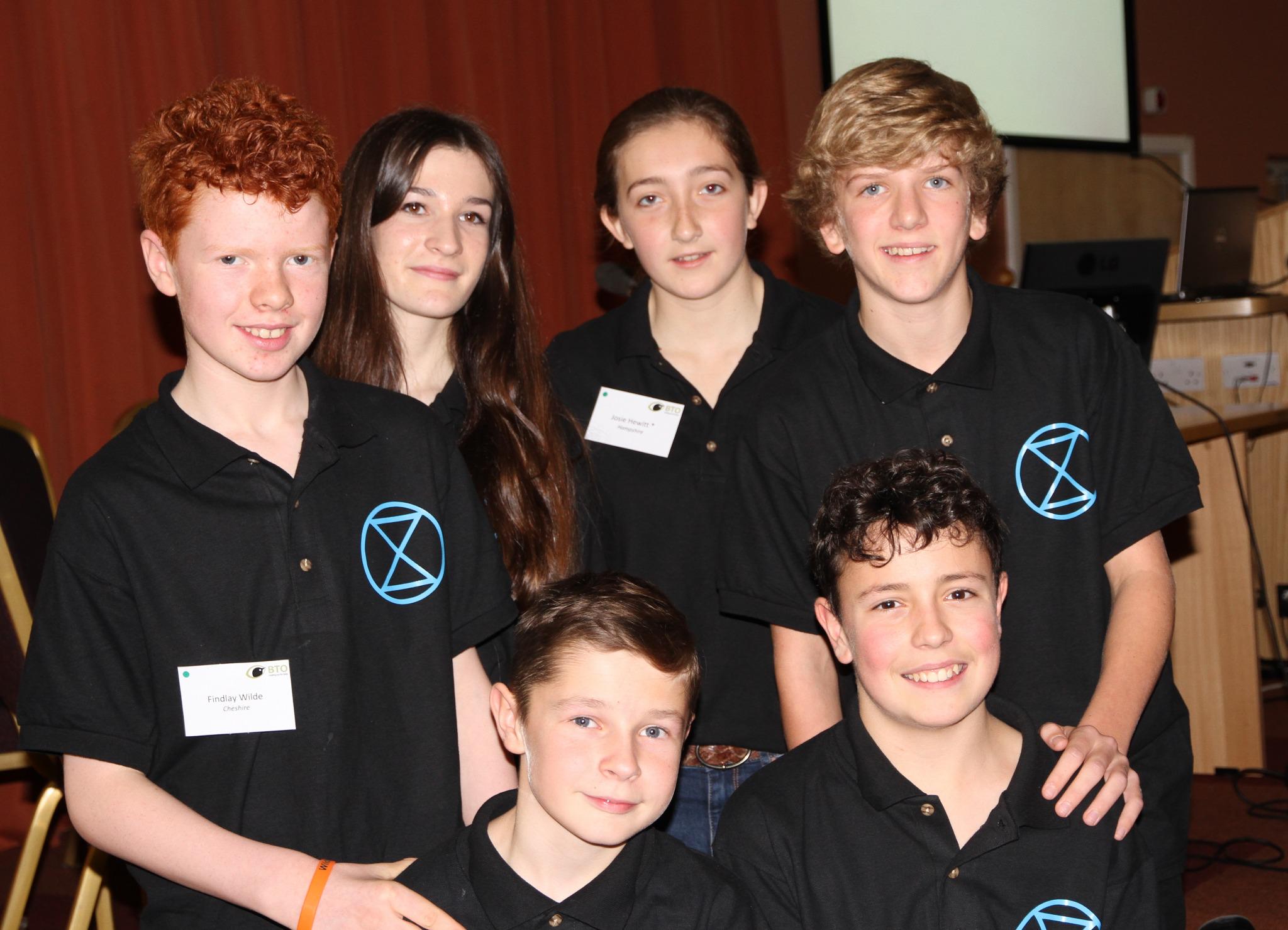
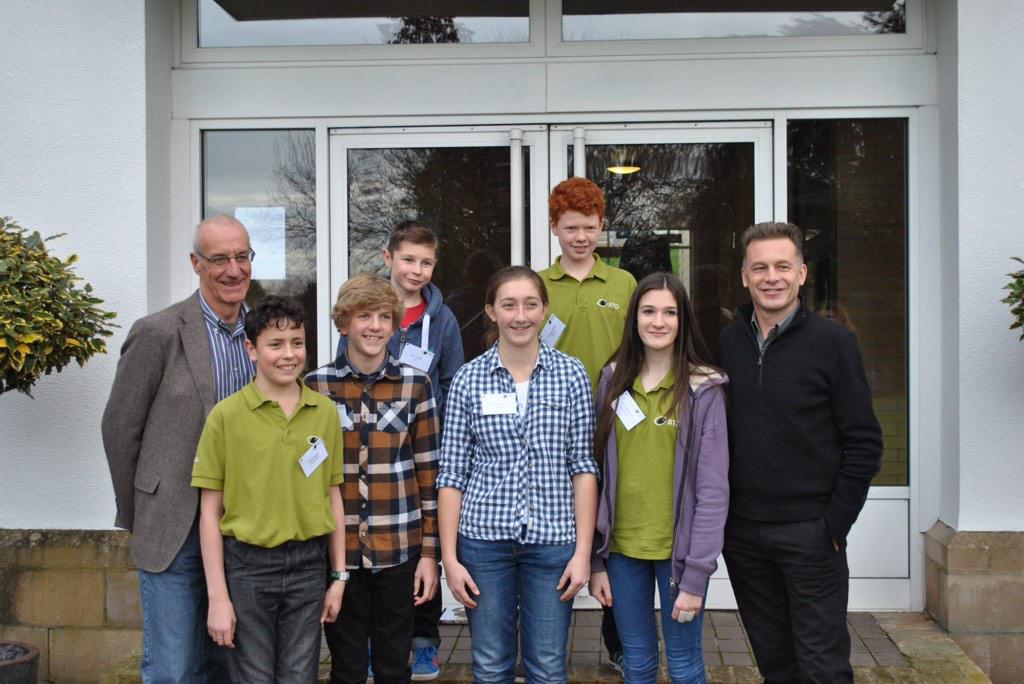
On Saturday, Josie Hewitt, Toby Carter, Findlay Wilde, Ben Moyes, Ellis Lucas and I were invited to have lunch with Andy Clement and Chris Packham, we were all very excited about this. We are all young birders/ringers and nest recorders and were at the conference to give a talk on what had inspired us to be birders. It was great to listen to Chris about what he has learned on his trips and his scientific knowledge filled us up.

Finally on Sunday, it was time for our talks. Although I was very nervous my talk went really well and everyone seemed to enjoy listening to all of us. I thought that my friends Ben, Josie, Toby, Findlay, and Ellis gave great talks. It was an experience I will never forget. Not just the talks but meeting new people and talking to them. I would also like to thank Andy again and everyone at the BTO for giving us this opportunity and for a great weekend.

I would also like to thank Lucy McRobert from A Focus on Nature who introduced our talks and for supporting us too through the AFON network.


Embedded image permalink 

Monday, 24 November 2014

Renishaw Ringing

Ringing - Renishaw, 22nd November 2014

This weekend I went ringing at Renishaw, a woodland setting with a lake which is a breathtaking scene of showering vibrant orange and autumnal coloured leaves scattering the ground.

Overall, we only had 34 birds, but each and every bird never disappoints me, especially the beautiful male Bullfinch and male Nuthatch.

Dan who owns a Swan rescue center has recently been coming with us and as he has a lot of experience with swans he enabled us to ring an elegant family of Swans, we have used yellow coloured rings to identify them, this is the male. 


I really enjoy ringing Great Tits (Parus Major), as I find being able to tell whether it is a male or female very fascinating. You can tell by checking if the black between it's belly extends towards the legs, if it does it is a male, if it is only a strip down it's belly, it is a female.

Unfortunately, Sundays ringing session was rained off, but I cant wait until next weekend for our next session!


Monday, 13 October 2014

Belizean Rhapsody


White-necked Jacobin

This August, my family and I went on a jam-packed, adventure wildlife holiday lead by Nick Baker to Belize, to see a wide variety of flora and fauna. Belize is a small country the size of Wales, located in Central America, largely covered in rainforest and has a Caribbean feel to it. We explored the Rainforest for the first week, in search of snakes, gigantic trees and plants and magnificent, brightly coloured birds. For the second week we took an exciting trip on a speed boat to a Caribbean Sea island, a picturesque place, rich in marine life and a good variety of birds.

Central American Whiptail
 The Rainforest:

Our excursions involved walks through the rainforest; each walk was different and brought new and interesting species. Everywhere you looked you would see wildlife. We met thousands of Leaf Cutter ant trails; these were extraordinary, hundreds of ants in a line to-ing and fro-ing from the canopy of the rainforest to their nests carrying leaves, weighing more than their own weight.
Coral Snake
There was nectar feeders placed around the lodge which attracted beautiful and vibrantly coloured hummingbirds during the day and bats during the night. I was fascinated by the mesmeric, beating of the wings on these small creatures.
One of the highlights of our morning walk was crossing paths with a beautiful, but deadly Coral snake silently, slithering through the grass. It soon began to flee away from our group, as although it is considered dangerous, it is not an aggressive species.

After dark lots of moths, crickets, grasshoppers and wasps, were attracted to a moth trap (a white sheet which was illuminated by a very bright light), so we could examine them closely to learn about the insects from Nick. Also scorpions, tarantulas and geckos could be seen.
We were lucky enough to spot a Kinkajou high up in a tree on a night walk, a small, secretive mammal, rarely seen, that mainly feeds on fruit. Also a Snapping Turtle sat in the small stream, as well as a Cane Toad. We also found a Cat snake hiding in a crevice, protecting itself from any predators (seen on a night walk, as it is nocturnal.)
We saw many other creatures on the night walk (too many to list!) but it was fascinating and so much fun!
We saw a wide variety of birds on the morning walks including Woodpeckers, Trogons, Honeycreepers and Hummingbirds. We even got to see a Keel-billed Toucan! This is Belize’s national bird. 

The Island, South Water Caye:
Bluehead Wrasse
We then travelled on to the tranquil island of South Water Caye. After a windswept trip on the boat to the island we went straight into a refreshing snorkelling tour. We did snorkelling every day and even a night snorkel. As soon as we entered the water on our night snorkel thousands of tiny fish would swim around your body and peck at you, it was a marvellous thing to experience. It felt like once I had entered that water I was in a completely different world, full of strange life forms.
Brown Boobys
On our numerous snorkels we saw seahorses, a Loggerhead turtle and a Hawksbill Turtle swimming past us, a Nurse Shark, Spotted Eagle rays, Stingrays and Sand rays, a Porcupine fish, a bat fish, octopuses, and many different species of fish. The coral was in excellent condition and very beautiful.
Osprey
On the first day we got a wonderful view of an Osprey soaring over the sea and off into the distance. It soon returned and it became a daily sighting, which was lovely to see. We saw Turnstones, Magnificent Frigatebirds, Brown booby’s, Brown pelicans, Neo-tropic Cormorants, Grackles and Yellow Crowned Night Herons. At night lots of Hermit crabs, small and large, would wander around and leave amazing footprints in the sand. The younger children in our group would race the crabs. It was great to see them getting so close to wildlife and having fun.

Nick setting a camera trap up
Overall, I would say I had the most fantastic trip and experience. I have gained a lot of knowledge from the trip. Nick's knowledge was outstanding and he also brought a lot of fun to the experience. It also made me realise how much I love wildlife, and not just UK species, but anywhere in the world. It also taught me even more how precious the habitats are; the rainforests and coral reef, which are very special places that we need to care for. We need to support conservation in these areas as much as possible and Eco-tourism has an important contribution to make.